How Vietnamese Green-Tech SMEs are shaping the country’s sustainable future
How AI is reshaping recruitment and HR practices in Vietnam / The impact of visual formats on product rating interpretation
Vietnam’s commitment to sustainability has often been discussed in terms of national strategies and large-scale infrastructure projects, but an increasing share of meaningful environmental innovation is emerging from the country’s small and medium-sized enterprises. These SMEs are applying scientific research, engineering, and local knowledge to address practical environmental challenges - from waste management to clean mobility, and their solutions are gradually shaping how communities adapt to climate and resource pressures.
One example is Alterno Vietnam, a renewable-energy enterprise providing modular solar power systems for households and small businesses. Their work gained attention after a series of pilot installations in the Mekong Delta demonstrated how small solar units could reduce energy costs for farms and rural enterprises. While large utilities focus on grid-scale solar, Alterno’s approach illustrates how SMEs can translate scientific and engineering concepts into accessible tools that meet local needs. The company also conducts training for local technicians, helping to extend technical knowledge into regions where sustainable infrastructure is still developing.
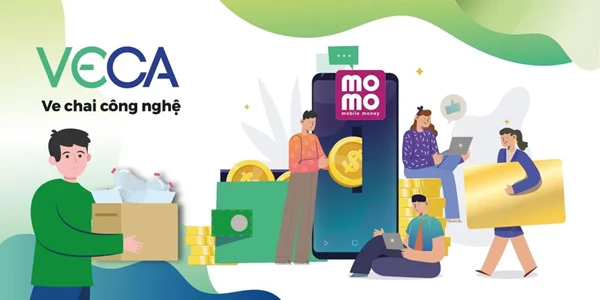
In the area of waste reduction, VECA, a Vietnamese digital recycling platform, has created a new model for how recyclable waste can be collected and valued. Through its mobile application, households can schedule pickups and receive compensation for items such as plastic, paper, and metals. By formalising interactions between households and informal waste collectors, VECA improves transparency, reduces landfill waste, and encourages community-based recycling behaviours. The platform demonstrates how SMEs can use technology and communication to influence public habits around environmental responsibility.
Clean mobility is another sector where SMEs are exerting influence. Dat Bike, Vietnam’s first electric motorbike startup, has grown rapidly by designing vehicles adapted specifically to Vietnamese roads and commuting patterns. While electric mobility is often associated with global brands, Dat Bike’s engineering work demonstrates how local enterprises can make technological transitions more culturally and economically feasible. The company’s communication strategy — centred on educating consumers about battery life, charging behaviour, and urban air quality — highlights the importance of clear public messaging when introducing new forms of sustainable technology.

Other SMEs work on everyday materials that reflect shifts in consumer culture. GreenJoy, a producer of biodegradable straws and plant-based alternatives to single-use plastics, has expanded from small-scale production to supplying hospitality businesses across Vietnam. The visibility of these products in restaurants and cafés illustrates how sustainable materials can influence public habits in ways that large policy announcements cannot — through daily, tangible interactions between consumers and environmentally minded enterprises.
Although these companies operate in different sectors, they share several characteristics: a science-based approach to problem-solving, an ability to adapt innovation to local contexts, and a recognition that communication is central to public acceptance of environmental solutions. Their growth reflects an ecosystem where SMEs increasingly play a role in sustainability transitions, complementing government strategies and larger private-sector investments.
These examples also show the importance of bridging scientific concepts with public understanding. Whether through Dat Bike’s consumer education campaigns or Alterno’s technician training, communication is not an afterthought but a necessary component of environmental adoption. As Vietnam looks ahead to achieving its climate commitments, such enterprises reveal how sustainable change often begins with small, iterative, and community-focused innovations.
End of content
Không có tin nào tiếp theo