Dam Rong 2 commune strengthens digital transformation in building new rural areas
Fortyfying the global supply chain has brought optimistic changes to Viet Nam industrial real estate market / Organizations detecting ransomware decline as the volume and impact of targeted attacks continue to rise
Digital transformation is linked to serving the people
Building new rural areas in the new phase is not limited to roads, irrigation systems, schools, health stations, or production development. As the demands of rural development increase, Dam Rong 2 commune (Lam Dong province) must also continue to improve the quality of services provided to the people, the efficiency of government administration, and expand access to information, public services, and markets for rural residents.
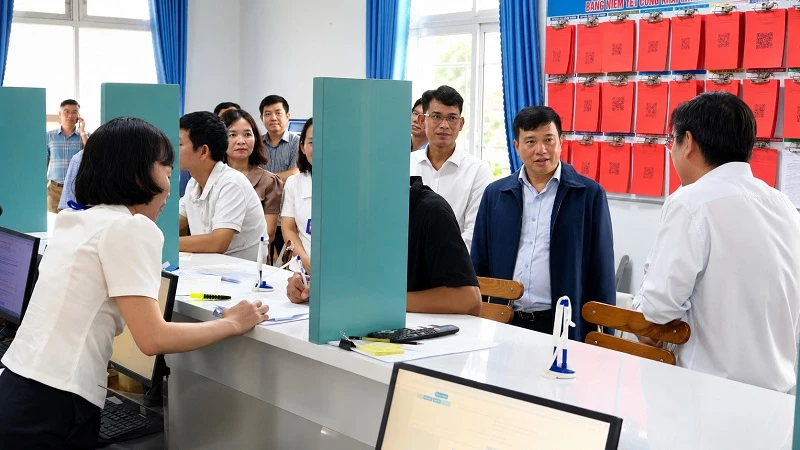
Lam Dong Provincial Party Secretary Y Thanh Ha Nie Kdam inspected the operating conditions of the Dam Rong 2 Commune Public Administrative Service Center.
In the National Criteria for New Rural Development for the period 2026-2030, issued under Decision No. 51/2025/QD-TTg of the Prime Minister, science, technology, and digital transformation are among the important contents. For communes in group 3 according to the criteria, such as Dam Rong 2, digital transformation should first focus on practical things: telecommunications infrastructure, digital government at the grassroots level, digitization of agricultural and environmental data, online public services, and the application of technology in management, production, and ensuring security and order.
As a mountainous commune formed by the merger of Rô Men and Liêng Srônh, Đam Rông 2 has 10 villages and a population of approximately 16,887 people, comprising 19 ethnic groups; ethnic minorities account for 65.93%. The large geographical area, scattered population, and uneven access to technology mean that digital transformation here cannot be done merely as a campaign or as a slogan. Everything must begin with the specific needs of the people.
The reality at the Commune Public Administrative Service Center shows that digital transformation has brought about changes in serving the people. People coming to complete procedures are guided to obtain a queue number, complete their documents, and submit them online; the process, procedures, and processing time are publicly and clearly posted. However, in April 2026 alone, the Center had 562 applications processed directly at the counter. This shows that the need for direct support remains significant, especially for the elderly, poor households, ethnic minorities, and people living far from the center.
Based on this reality, each time people visit the service counter, it's also an opportunity for officials to provide further guidance on online public services, VNeID, cashless payments, checking the results of administrative procedures, or scanning QR codes to assess satisfaction levels. This "hands-on" approach, though slow, is suitable for a mountainous commune, because digital transformation is only meaningful when vulnerable people and those with limited access to technology are not left behind.
Initial results from the "Digital Literacy Movement" show that digital transformation has begun to spread from the grassroots level. The commune has issued numerous implementation documents, published 35 news articles promoting digital transformation, online public services, cashless payments, and basic digital skills; and organized four training courses on digital skills for commune officials and members of the community digital technology team.
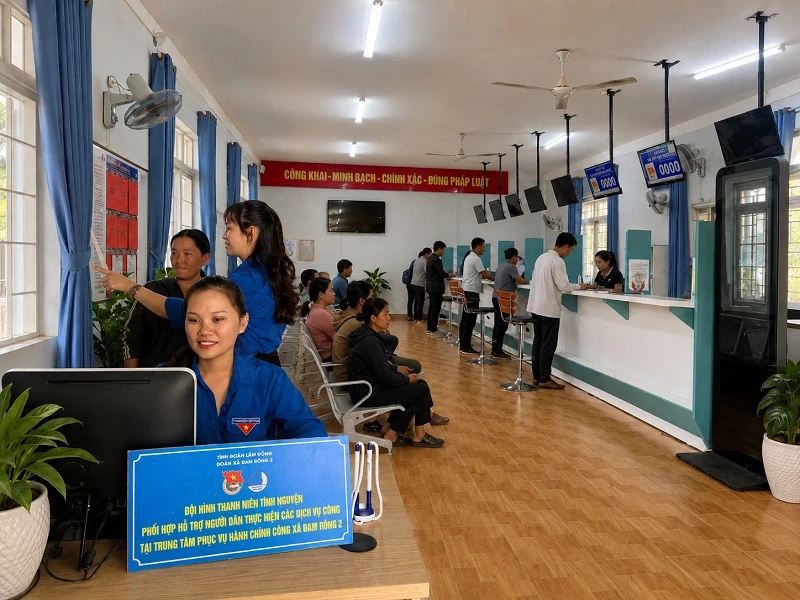
People carry out administrative procedures at the Dam Rong 2 Commune Public Administrative Service Center.
Notably, 100% of commune officials and civil servants have received training in digital skills and AI usage in public administration. Management and operation in an electronic environment are prioritized through the iOffice document management system, electronic signatures, and online work processing platforms. As the government apparatus changes its working methods, digital transformation will have the opportunity to spread to the people.
Bringing digital transformation into rural production and life
The digital transformation plan for Dam Rong 2 commune for the period 2026-2030 identifies three key areas of focus: digital government, digital economy, and digital society; while also emphasizing information security, cybersecurity, and data security. This framework provides direction for digital transformation to extend beyond administrative functions, encompassing social governance, agricultural production and daily life.
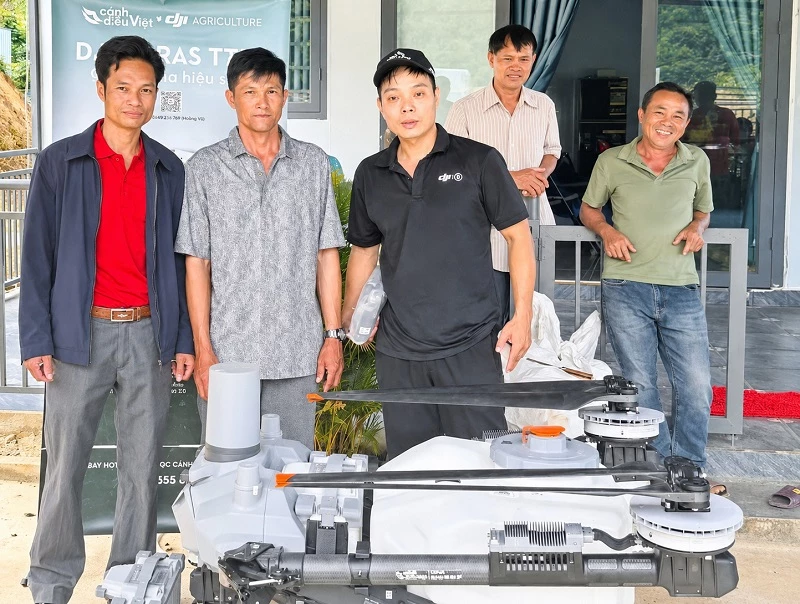
Mr. Tran Tan Hung - Deputy Head of the Economic Department of Dam Rong 2 Commune (far left), on behalf of the Commune People's Committee, handed over the mechanization model (DJI AGRAS T70P drone) to the Da Ton Durian Cooperative, Bang Lang village.
In this context, the Community Digital Technology Team plays a crucial bridging role. This force directly reaches out to the people, guiding them in installing applications, using public services, accessing official information, and performing basic operations on smartphones. With an area comprising 10 villages, where the level of technological access varies among different population groups, the most effective method of dissemination remains direct guidance to individual households and residents.
Digital transformation also needs to be clearly demonstrated in agricultural production. Dam Rong 2 has strengths in coffee, durian, mulberry, pineapple, livestock farming, and several high-tech agricultural models. If technology is properly utilized, people can access market information, farming techniques, weather forecasts, and pest control; while simultaneously implementing traceability, promoting products, and connecting with cooperatives, businesses, and consumers.
The entire commune has formed 11 production linkages for durian, honey pineapple, and sturgeon, with 127 households participating; 12 OCOP 3-star products have been listed on e-commerce platforms. This provides a foundation for the locality to continue supporting producers in perfecting packaging, labels, QR codes for traceability, product images, brand stories, and sales skills on digital platforms.
For farmers, digital transformation is not just about selling online. More importantly, it's about knowing how to use smartphones to support production, keeping field diaries, managing growing areas, monitoring pests and diseases, staying informed about prices, and connecting with markets. When technology is linked to the specific benefits of each household, the digital transformation process will be more sustainable and substantial.
Along with the digital economy, the digital society is also a key area that needs persistent implementation. People need guidance on using VNeID, cashless payments, electronic health records, and official information channels; and they need to know how to protect themselves from online fraud. Simple skills such as not providing OTP codes, not clicking on suspicious links, and not transferring money without verifying information need to be regularly disseminated in an easy-to-understand and accessible manner.
Digital transformation also contributes to ensuring security and order, managing the population, preventing crime, and building a nationwide movement to protect national security. The application of AI cameras for security surveillance throughout the commune shows that technology is gradually penetrating many aspects of rural life, from administration and production to security, environment, and community governance.
However, digital transformation in Dam Rong 2 still faces many challenges. Network infrastructure in some areas needs further improvement; the smart device usage skills of some residents are still limited; and a reluctance to change persists. Therefore, the locality needs to proceed step by step, starting with things that people need, that are easy to understand, easy to implement, and that show tangible results.
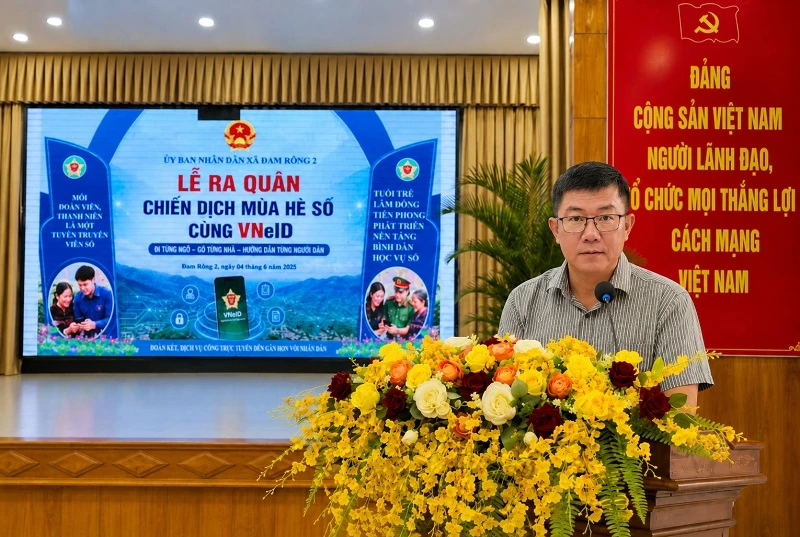
Mr. Duong Tat Phong - Vice Chairman of the People's Committee of Dam Rong 2 commune, delivered a speech at the launching ceremony of the "Digital Summer Campaign with VNeID" in 2026.
According to Mr. Duong Tat Phong, Vice Chairman of the People's Committee of Dam Rong 2 commune, digital transformation does not replace the role of people, but opens up new ways for the government to serve the people faster, more efficiently, and closer to the people. It also creates conditions for farmers to access knowledge, markets, and science and technology more promptly; for local products to have more opportunities to reach further markets; and helps manage the process of building new rural areas in a more open, transparent, and sustainable way.
“For Dam Rong 2, digital transformation is therefore not a general guiding concept, but a practical solution to improve the quality of governance at the grassroots level, promote rural economic development, and create more momentum for the locality to gradually complete the criteria for new rural areas in the 2026-2030 period", Vice Chairman Duong Tat Phong shared.
End of content
Không có tin nào tiếp theo