Vice Chairman of the People's Committee of Dam Rong 2 Commune: Building a new rural area starts from the awareness and joint efforts of the people
Businesses urge Da Nang to open mobile sales points due to shortage in food supply / An overview of the implementation of 'three on-spot' in Da Nang industrial zones
Building upon the achievements of localities prior to the restructuring, Dam Rong 2 commune (Lam Dong province) is embarking on a new phase with the goal of achieving new rural standards by 2030. This task requires the coordinated efforts of the government, people, businesses, cooperatives, and mass organizations. A reporter from Vietnam Business Magazine interviewed Mr. Nguyen Van Chinh, Vice Chairman of the People's Committee of Dam Rong 2 commune, on this issue.
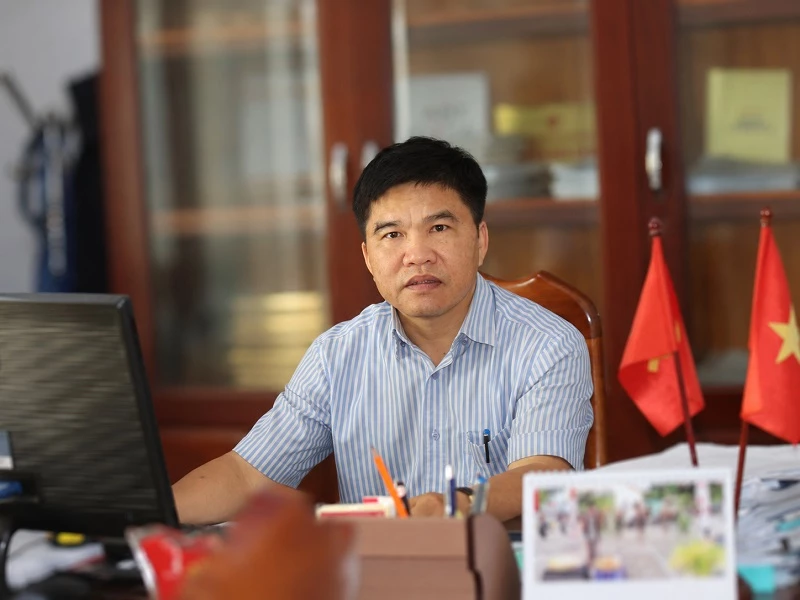
Mr. Nguyen Van Chinh – Vice Chairman of the People's Committee of Dam Rong 2 Commune.
Sir, with the goal of achieving the new rural standard by 2030, how does Dam Rong 2 commune identify the role of information and communication in mobilizing the collective efforts of the people?
Mr. Nguyen Van Chinh: Building new rural areas is not just about infrastructure projects or criteria, but about improving the daily quality of life for the people. Therefore, first and foremost, we must ensure that the people understand the goals, their rights, and their responsibilities correctly.
In 2026, the commune aims to strengthen information and communication about the "Nationwide Emulation Movement for Building New Rural Areas" through various forms suitable to the local level. When people understand correctly, they will actively participate; when households, cooperatives, and businesses see the benefits clearly, they will join hands; and when all organizations get involved, the movement will have a wider reach.
If you had to choose one phrase to describe the new rural development program in Dam Rong 2 in this new phase, what would you choose?
Mr. Nguyen Van Chinh: I chose the phrase "improving quality." In this new phase, Dam Rong 2 cannot just look at the number of projects or movements, but must improve the quality of each criterion. Roads must better serve production; agriculture must increase in value; the environment must be clean through daily habits; culture must be present in community life; and public services must be more convenient for the people.
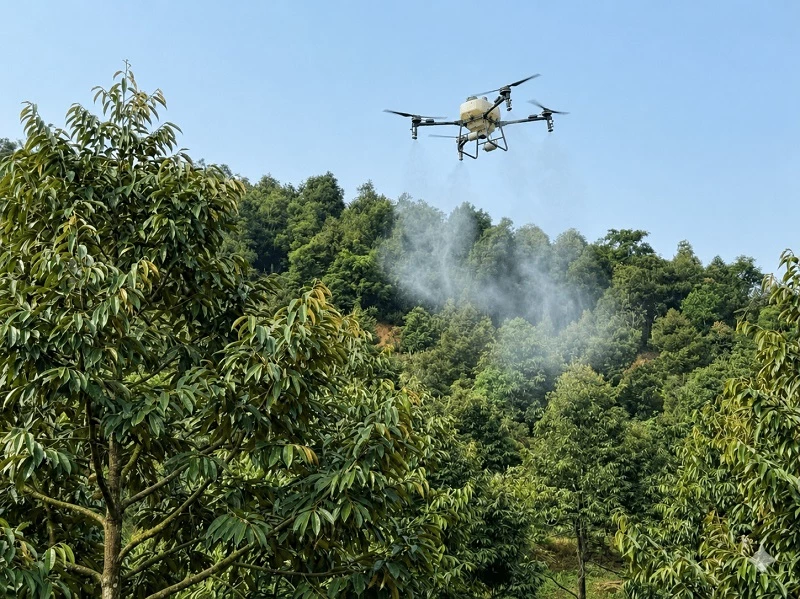
The people of Dam Rong 2 are investing in mechanization and applying high technology in agricultural production.
According to the current situation review, the commune still has many indicators that need further improvement. This shows that the road ahead is not simple, but it also helps the locality to more clearly identify what needs to be done first, what needs to mobilize social resources, and what needs to change in the awareness and actions of each household.
Of all the changes that have taken place, which one is the most satisfying for you?
Mr. Nguyen Van Chinh: The biggest highlight is the consensus of the people. Dam Rong 2 is a mountainous commune with a large area and a large number of ethnic minorities, and the conditions for development are still very difficult. If we only rely on state resources, it will be very difficult to create sustainable change.
In the villages, many movements have become well-established, such as environmental sanitation campaigns, clearing village roads, beautifying the landscape, and participating in "Saturday with the people to build new rural areas." These things may sound small, but they create concrete changes. When people take the initiative to clean the roads in front of their houses, maintain public facilities, and discuss ways to develop production, the new rural areas truly have roots in the community.
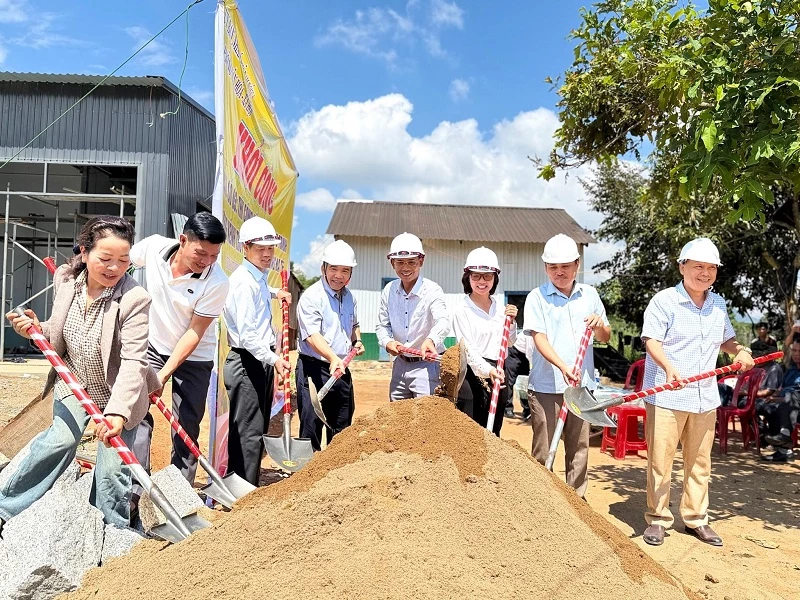
Leaders of Dam Rong 2 commune performed the groundbreaking ceremony for the construction of the irrigation canal in the Da Te rice field area, in Hamlet 4.
For a commune still facing many difficulties, what is the biggest challenge in the period 2026-2030?
Mr. Nguyen Van Chinh: The biggest challenge is that resources and awareness must both be raised. The new set of criteria has higher requirements regarding infrastructure, environment, income, production organization, culture, digital transformation, public administration, social security, and the level of citizen participation.
Financial resources are very important, but not everything. If people still think that building new rural areas is solely the responsibility of the State, it will be difficult to go far. Conversely, when people clearly see the benefits and responsibilities, they will proactively keep roads clean, protect the environment, participate in production linkages, apply new technologies, and build cultured families. That is the most important foundation.
Infrastructure is considered a prerequisite for development. How will Dam Rong 2 prioritize this aspect?
Mr. Nguyen Van Chinh: For Dam Rong 2, transportation infrastructure, electricity, irrigation, schools, and cultural institutions remain very important conditions. Projects in production areas, drainage ditches, upgrading rural roads, and electricity systems serving production and daily life are all directly linked to the lives of the people.
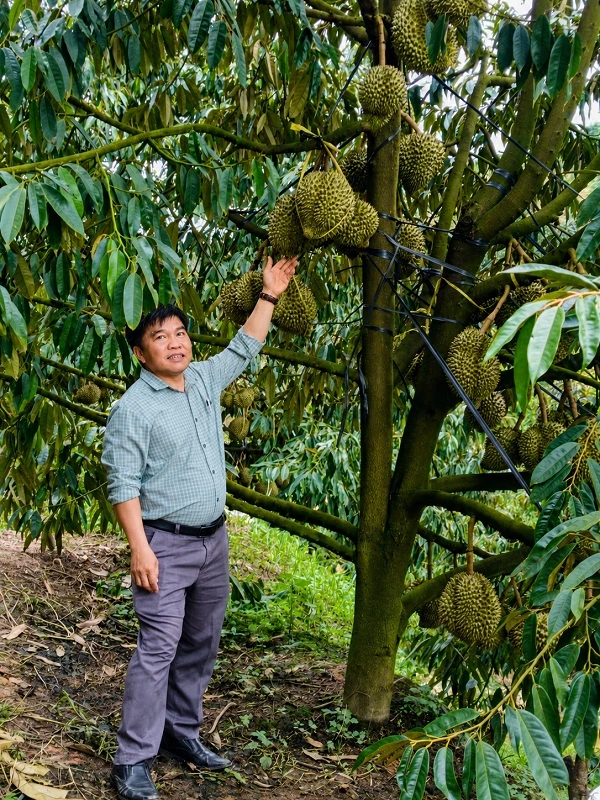
Durian is a crop that the locality is focusing on restructuring, transforming from less efficient crops to building raw material areas that meet VietGAP standards.
Improved roads make it easier for people to transport supplies and agricultural products; better irrigation ensures more stable production; and more reliable electricity provides favorable conditions for the development of daily life, production, and processing. Simultaneously, the commune focuses on telecommunications infrastructure, creating a foundation for digital transformation, e-commerce, and access to online public services.
However, investment must be accompanied by effective use. Once completed, the infrastructure must be protected and utilized by the people for its intended purpose, without encroachment, damage, or littering into canals and ditches. New rural development is not just about building more infrastructure, but about managing, operating, and sustainably developing that infrastructure.
Agricultural production remains the cornerstone of Dam Rong 2. What will the commune do to make agriculture a driving force for the new rural development?
Mr. Nguyen Van Chinh: Dam Rong 2 has strengths in coffee, durian, mulberry, honey pineapple, sturgeon farming, livestock breeding, and some high-tech agricultural models. The challenge is to shift from small-scale, experience-based production to production with established processes, linkages, and markets.
A key focus in the coming period is the renovation of unproductive orchards and the conversion of inefficient crop areas according to a suitable roadmap. The commune will review areas of old, low-yielding coffee plantations, land along rivers and streams, and inefficient single-crop rice land to guide the conversion to suitable crops such as replanted coffee, durian, mulberry, or other models with higher economic value.
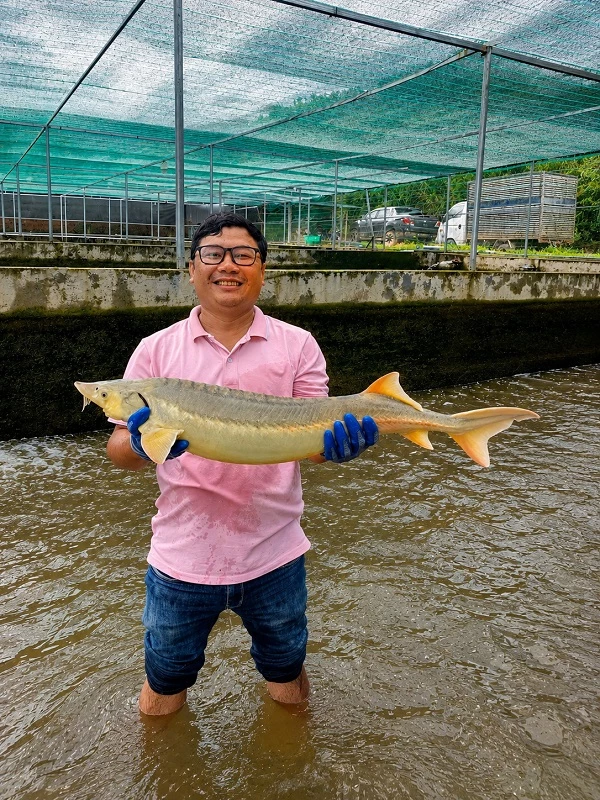
Sturgeon farming is one of the key economic sectors of Dam Rong 2 commune.
In addition, the commune continues to encourage the development of green agriculture, circular agriculture, and high-tech agriculture; expanding planting area codes and traceability. At the same time, the locality promotes the construction of production and consumption chains, forming a closed cooperative chain from the supply of materials, cultivation/production to procurement, processing, and distribution. Farmers produce good products, but to reach a wider market, they need cooperatives, businesses, processing facilities, packaging, standards, branding, and stable outlets.
Speaking of branding, OCOP is considered an important direction. How do you view the role of OCOP in building new rural areas in Dam Rong 2?
Mr. Nguyen Van Chinh: OCOP is not just about products achieving star ratings. For Dam Rong 2, OCOP is a way to enhance the value of local products, change production mindsets, and create additional livelihoods for the people.
The entire commune currently has many agricultural products, processed products, and distinctive products with development potential. The challenge is to continue standardizing quality, packaging, traceability labels, product stories, and consumer markets. We hope that each OCOP product from Dam Rong 2 will not only sell well but also tell the story of the land, people, culture, and agricultural practices of the locality.
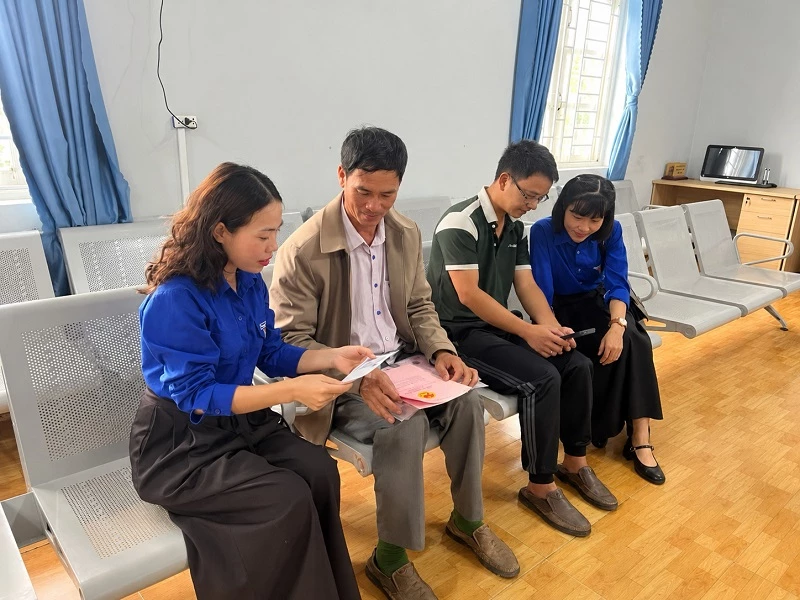
The youth of Dam Rong 2 are actively participating in bringing digital technology closer to the people.
In the 2026 communication plan, digital transformation is a key focus. Where should digital transformation begin in a mountainous commune?
Mr. Nguyen Van Chinh: Digital transformation must begin with the practical needs of the people. In Dam Rong 2, we focus on things that are close to people's lives, such as guiding them to use online public services, access policy information, promote agricultural products, traceability, and participate in e-commerce.
Digital transformation cannot be confined to administrative agencies. To have digital citizens and a digital society in rural areas, digital skills must be brought to every village and every household, especially the elderly, women, poor households, and ethnic minority households. The important thing is to ensure that no one is left behind in the process of accessing technology.
If he were to send a message to the people, businesses, cooperatives, and organizations, what would he want to emphasize?
Mr. Nguyen Van Chinh: I want to emphasize that building new rural areas is not the responsibility of any one person alone. The government has the responsibility to provide direction, organize implementation, mobilize resources, and work alongside the people. But each household, each village, each cooperative, and each enterprise has its own role.
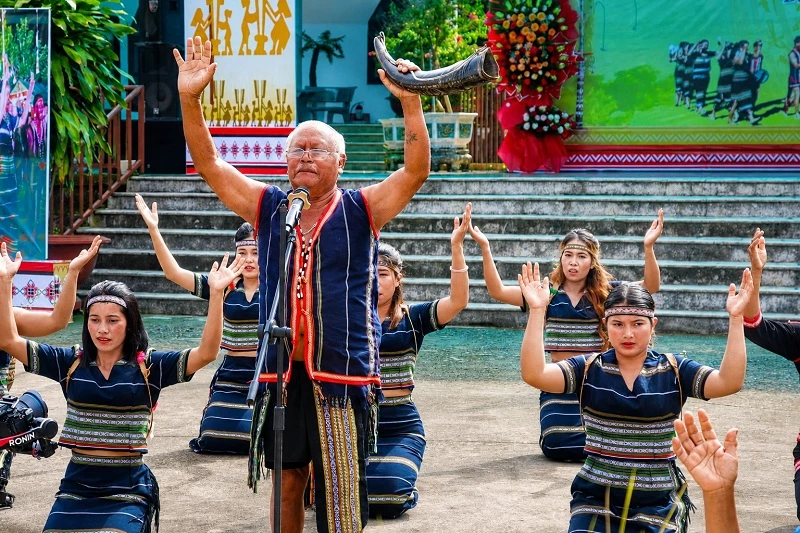
Dam Rong 2 is committed to preserving and promoting traditional cultural values in the context of building new rural areas.
People should start with concrete actions: preserving the environment, focusing on production, participating in linkages, building culturally advanced families, and protecting public infrastructure. Cooperatives and businesses should work with localities to increase the value of agricultural products, expand markets, and create more jobs. Organizations should continue to be the core force in promoting digital transformation, protecting the environment, and developing livelihoods.
There is still much work to be done on the road to 2030, but if the entire political system and the people work together, Dam Rong 2 will have more momentum to complete the criteria, improve the quality of life, and build a more civilized and sustainable homeland.
Thank you, sir!
End of content
Không có tin nào tiếp theo