Dam Rong 2 puts public participation at the heart of new-style rural development
Businesses urge Da Nang to open mobile sales points due to shortage in food supply / An overview of the implementation of 'three on-spot' in Da Nang industrial zones
Building on the results achieved before administrative restructuring, Dam Rong 2 Commune is embarking on a new phase, with the goal of meeting new-style rural standards by 2030. Achieving that goal will require coordinated action by the local government, residents, businesses, cooperatives and community organisations. Vietnam Business Magazine spoke with Nguyen Van Chinh, Vice Chairman of the Dam Rong 2 Commune People's Committee, about the commune's priorities for the years ahead.
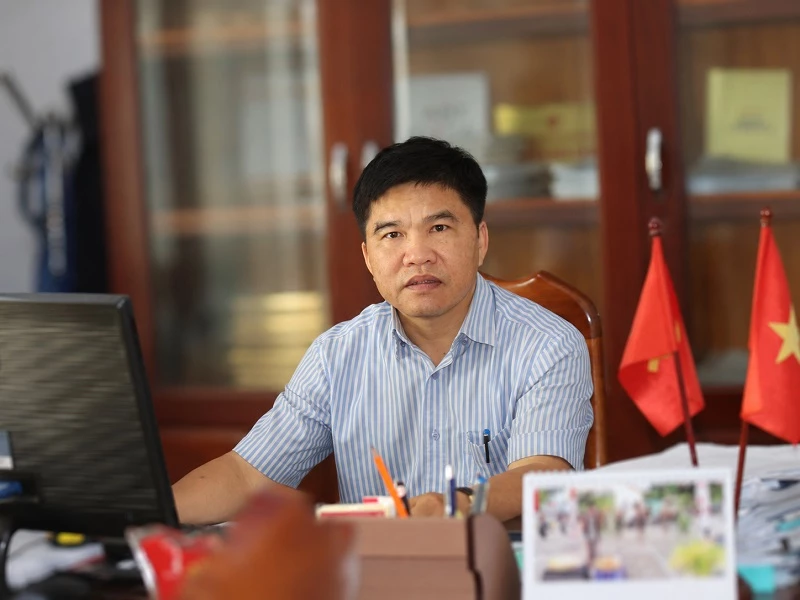
Nguyen Van Chinh, Vice Chairman of the Dam Rong 2 Commune People's Committee.
With Dam Rong 2 aiming to meet new-style rural standards by 2030, what role does communication play in encouraging people to participate?
Mr. Nguyen Van Chinh:New-style rural development is not merely about projects or ticking off criteria; it is ultimately about improving people's daily quality of life. That is why our first priority is to ensure residents clearly understand the programme's objectives, the benefits it brings and their own responsibilities.
In 2026, the commune will step up communications around the nationwide emulation campaign for new-style rural development, using formats suited to local conditions. When people understand the programme, they are more willing to take part. When farming households, cooperatives and businesses see clear benefits, they will work alongside us; and when community organisations are actively involved, the campaign can reach more people.
If you were to choose one phrase to describe Dam Rong 2's approach to new-style rural development in this new phase, what would it be?
Mr. Nguyen Van Chinh:I would choose the phrase "raising standards". In this new phase, Dam Rong 2 cannot judge progress solely by the number of projects completed or campaigns launched. We must raise the quality of every criterion. Roads should support production more effectively; agriculture should generate greater value; a clean environment must be built on everyday habits; cultural values should be reflected in community life; and public services should be easier for residents to access.
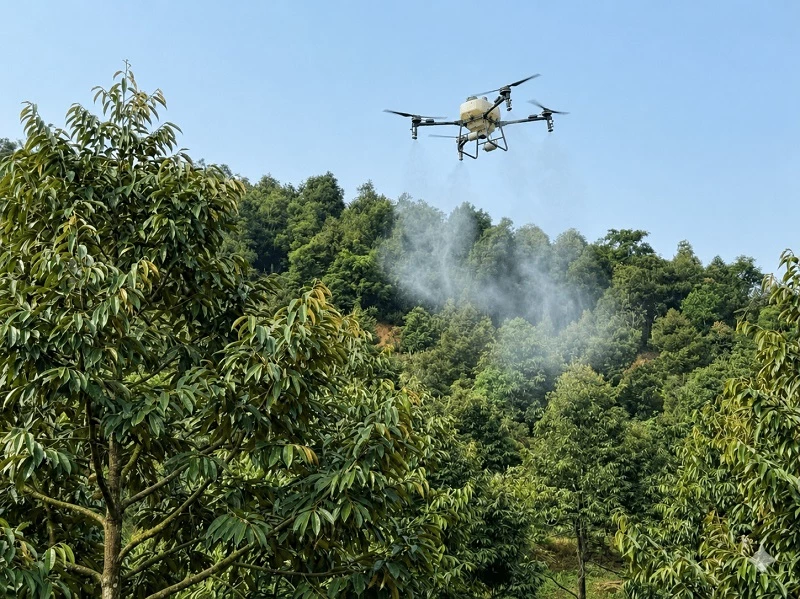
Residents of Dam Rong 2 invest in mechanisation and apply high technology in agricultural production.
Our current review shows that the commune still has many indicators that need further improvement. This makes clear that the road ahead will not be easy. At the same time, it helps us identify which tasks should come first, where social resources need to be mobilised, and what changes are needed in the awareness and actions of individual households.
Of the changes achieved so far, which one stands out most to you?
Mr. Nguyen Van Chinh:The strongest result has been public consensus. Dam Rong 2 is a mountainous commune covering a large area, with a sizeable ethnic minority population and many continuing development challenges. If we relied on public funding alone, it would be very difficult to create lasting change.
In the villages, activities such as community clean-ups, clearing roadside vegetation, improving the landscape and joining the "Saturday with the people for new-style rural development" campaign have become regular practices. They may sound modest, but they create visible change. When residents clean the roads in front of their homes, help maintain shared facilities and discuss ways to improve production, new-style rural development truly takes root in the community.
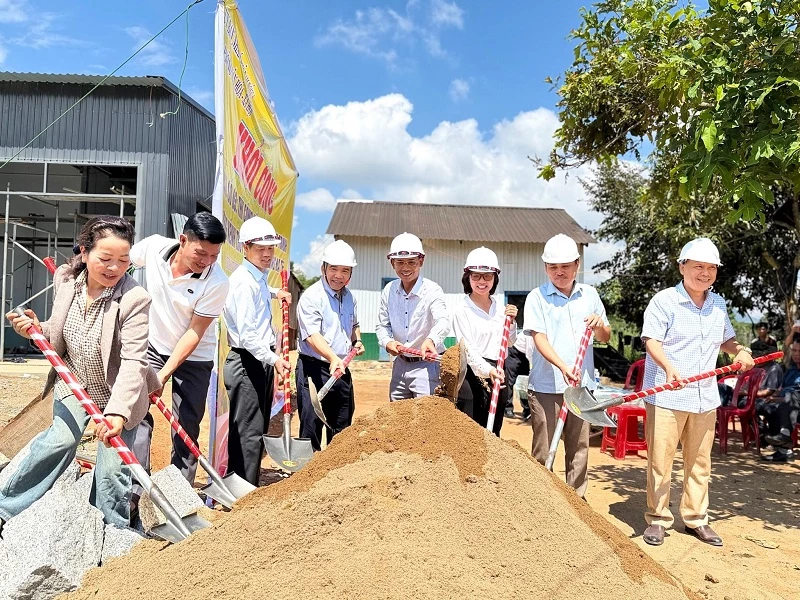
Dam Rong 2 leaders at the groundbreaking ceremony for an irrigation canal serving the Da Te rice fields in Hamlet 4.
For a commune that still faces considerable difficulties, what is the greatest challenge in the 2026-2030 period?
Mr. Nguyen Van Chinh:The greatest challenge is to improve both resources and awareness. The new criteria set higher standards for infrastructure, the environment, income, production organisation, culture, digital transformation, public administration, social security and citizen participation.
Financial resources matter, but they are not everything. If residents view new-style rural development as solely the State's responsibility, progress will be limited. When people understand both the benefits and their responsibilities, however, they will take the initiative to keep roads clean, protect the environment, join production linkages, adopt new technology and uphold cultural standards in family life. That awareness is the most important foundation.
Infrastructure is widely seen as a prerequisite for development. How will Dam Rong 2 set priorities in this area?
Mr. Nguyen Van Chinh: For Dam Rong 2, transport, electricity, irrigation, schools and community cultural facilities remain essential. Access routes to production zones, drainage systems, upgraded rural roads and electricity networks serving both production and daily life all have a direct bearing on residents.
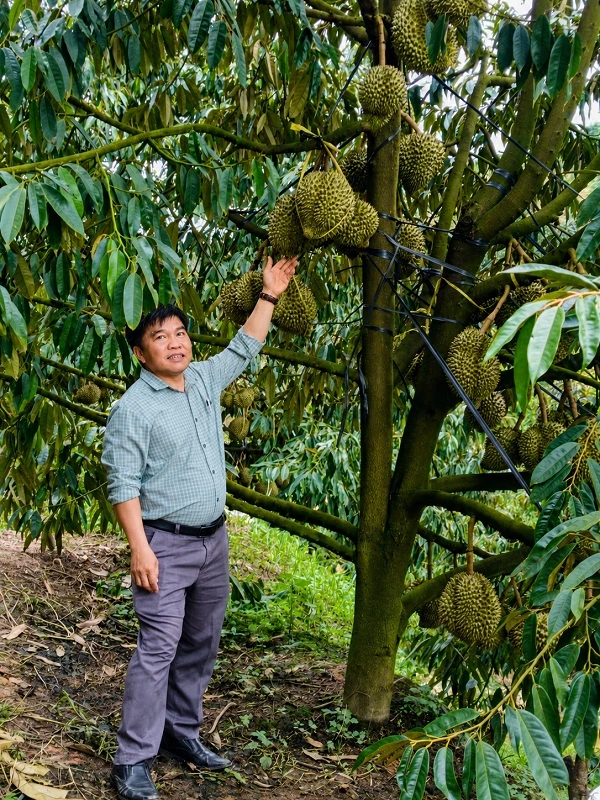
Durian is among the crops prioritised in the commune's agricultural restructuring, as inefficient crop areas are converted into VietGAP-compliant production zones.
Better roads make it easier to transport supplies and agricultural produce; improved irrigation makes production more stable; and reliable electricity supports daily life, farming and processing. At the same time, the commune is strengthening telecommunications infrastructure as a foundation for digital transformation, e-commerce and access to online public services.
Infrastructure investment must also be matched by effective use. Once facilities are completed, residents need to help protect them and use them as intended, avoiding encroachment, damage or dumping waste into canals and drainage ditches. New-style rural development is not only about building more facilities; it is also about managing, operating and maintaining them sustainably.
Agriculture remains the backbone of Dam Rong 2's economy. What will the commune do to make it a driving force for new-style rural development?
Mr. Nguyen Van Chinh:Dam Rong 2 has comparative strengths in coffee, durian, mulberry, honey pineapple, sturgeon aquaculture, livestock and several high-tech agricultural models. The challenge is to move away from fragmented, experience-based production towards process-driven production linked to partners and markets.
One priority will be to rehabilitate low-productivity orchards and convert inefficient crop areas under an appropriate roadmap. The commune will review ageing, low-yield coffee areas, land along rivers and streams, and inefficient single-crop rice land, then guide conversion to replanted coffee, durian, mulberry or other models with higher economic value.
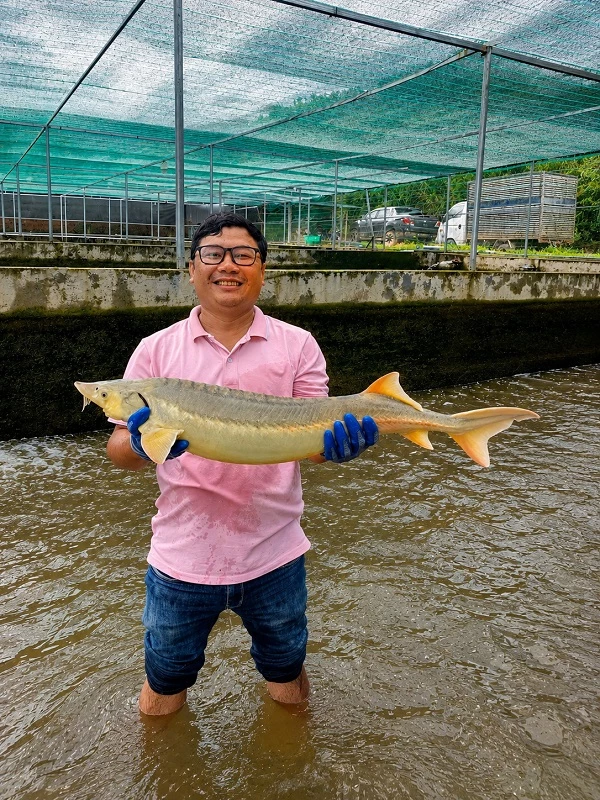
Sturgeon aquaculture is one of Dam Rong 2's key economic sectors.
The commune will also continue to encourage green, circular and high-tech agriculture, expand growing-area codes and traceability, and promote integrated production-to-market value chains. These chains should connect input supply and farming with procurement, processing and distribution.
Farmers may produce high-quality goods, but reaching larger markets requires cooperatives, businesses, processing facilities, suitable packaging, recognised standards, strong brands and stable sales channels.
Turning to branding, the One Commune One Product programme is seen as an important direction. How important is OCOP to Dam Rong 2's new-style rural development?
Mr. Nguyen Van Chinh:OCOP is not simply about securing a star rating. For Dam Rong 2, the programme is a way to add value to local products, change production mindsets and create additional livelihoods for residents.
The commune is home to many agricultural, processed and distinctive local products with development potential. The next task is to standardise quality, packaging, traceability labels, product stories and market access. We want every OCOP product from Dam Rong 2 not only to sell well, but also to tell the story of the locality's land, people, culture and farming practices.
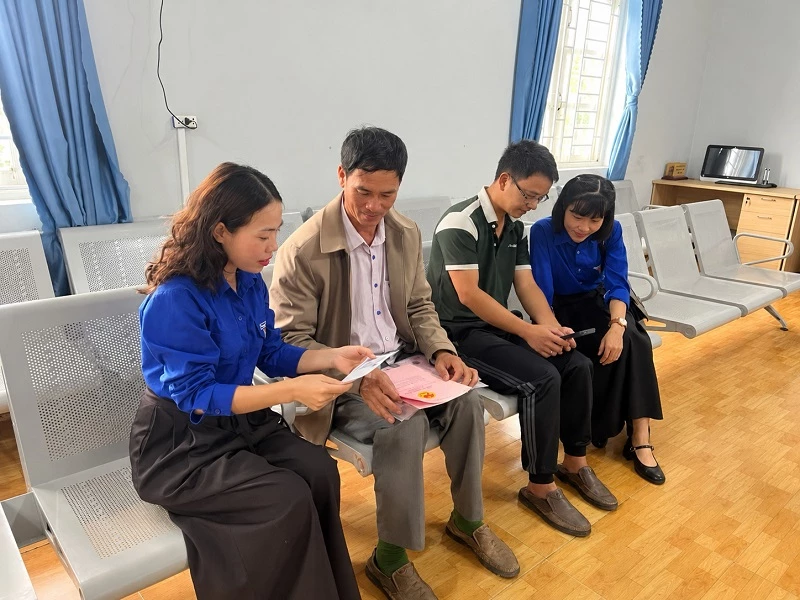
Young people in Dam Rong 2 are helping bring digital technology closer to local residents.
Digital transformation features prominently in the commune's 2026 communications plan. Where should this process begin in a mountainous commune?
Mr. Nguyen Van Chinh:It must begin with residents' practical needs. In Dam Rong 2, we are focusing on everyday applications: helping people use online public services, access policy information, promote agricultural products, trace product origins and participate in e-commerce.
Digital transformation cannot remain confined to government offices. Building digital citizens and a digital society in rural areas means bringing digital skills to every village and household, especially older people, women, low-income households and ethnic minority communities. The key is to ensure that no one is left behind as technology becomes more widely used.
What message would you like to send to residents, businesses, cooperatives and community organisations?
Mr. Nguyen Van Chinh: I would emphasise that new-style rural development is a shared responsibility. The local government must provide direction, organise implementation, mobilise resources and work alongside residents, but every household, village, cooperative and business also has a distinct role.
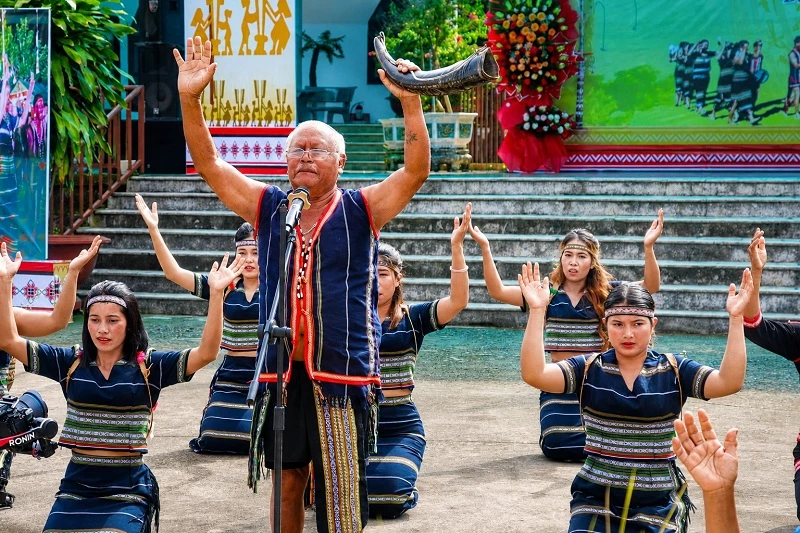
Dam Rong 2 is working to preserve and promote traditional cultural values as part of new-style rural development.
Residents can begin with practical actions: keeping their surroundings clean, investing in production, joining value chains, upholding cultural standards in family life and protecting public facilities. Cooperatives and businesses should work with the commune to raise the value of agricultural products, expand markets and create more jobs. Community organisations should remain a core force in communications, digital transformation, environmental protection and livelihood development.
There is still much to be done before 2030, but if the entire local political system and the people work together, Dam Rong 2 will have stronger momentum to meet the remaining criteria, improve quality of life and build an increasingly civilised and sustainable community.
Thank you for the interview.
End of content
Không có tin nào tiếp theo