Digital transformation reshapes rural development in Dam Rong 2
Fortyfying the global supply chain has brought optimistic changes to Viet Nam industrial real estate market / Organizations detecting ransomware decline as the volume and impact of targeted attacks continue to rise
Digital government designed around residents' needs
New-style rural development is no longer confined to roads, irrigation systems, schools, health stations and production infrastructure. As expectations for rural development rise, Dam Rong 2 Commune in Lam Dong Province must also improve the quality of public services and the effectiveness of local administration, while widening rural residents' access to information, public services and markets.
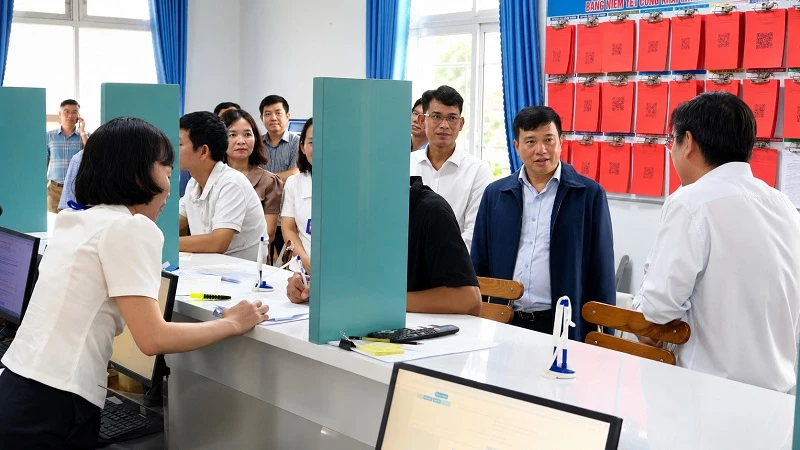
Photo caption: Lam Dong Provincial Party Secretary Y Thanh Ha Nie Kdam inspects operating conditions at the Dam Rong 2 Commune Public Administration Service Centre.
Under Prime Ministerial Decision No. 51/2025/QD-TTg promulgating the national criteria for new-style rural development for 2026-2030, science, technology and digital transformation form an important part of the framework. As a Group 3 commune under the criteria, Dam Rong 2 must prioritise practical areas: telecommunications infrastructure, grassroots digital government, the digitisation of agricultural and environmental data, online public services, and the use of technology in management, production, security and public order.
The mountainous commune was formed through the merger of Ro Men and Lieng Sronh. It comprises 10 villages and has a population of about 16,887 people from 19 ethnic groups, with ethnic minority communities accounting for 65.93 per cent. Its large territory, dispersed population and uneven levels of access to technology mean that digital transformation cannot be treated as a short-term campaign or reduced to a slogan. It must begin with residents' specific needs.
Changes are already visible at the commune's Public Administration Service Centre. Residents are guided through taking a queue number, completing their documents and submitting applications online, while procedures, requirements and processing times are clearly displayed. Even so, in April 2026 alone, the centre issued results for 562 applications directly at its service counter.
The figure shows that demand for face-to-face assistance remains high, particularly among older people, poor households, ethnic minority residents and those living far from the commune centre.
Each visit to the service counter therefore becomes an opportunity for officials to provide further guidance on online public services, VNeID, cashless payments, checking the status of administrative procedures and scanning QR codes to rate service satisfaction. This hands-on approach may take time, but it is well suited to a mountainous commune. Digital transformation is meaningful only when vulnerable residents and people with limited access to technology are not left behind.
Early results from the Digital Literacy for All movement show that digital transformation is beginning to spread at grassroots level. The commune has issued a range of implementation documents, published 35 articles on digital transformation, online public services, cashless payments and basic digital skills, and held four digital-skills training courses for commune officials and members of Community Digital Technology Teams.
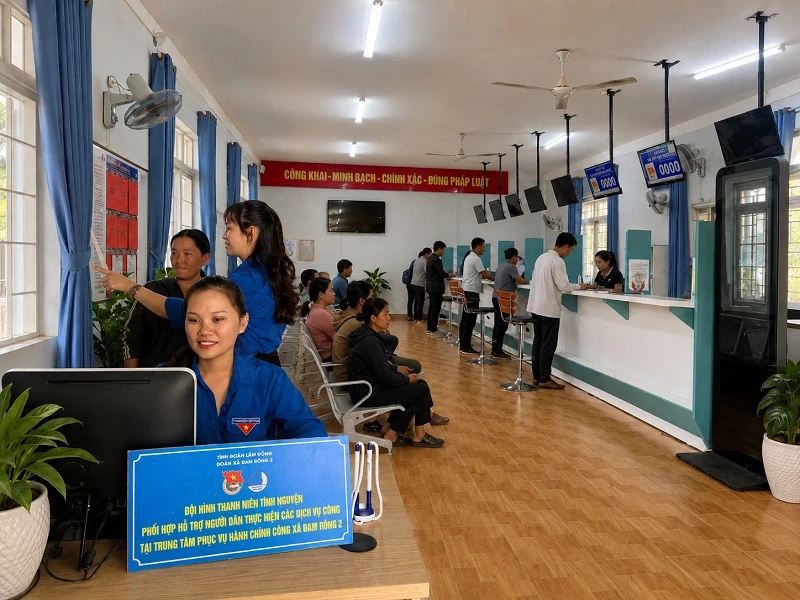
Residents complete administrative procedures at the Dam Rong 2 Commune Public Administration Service Centre.
Notably, all commune officials and civil servants have been trained in digital skills and the use of artificial intelligence in public administration. Electronic management and operations are being promoted through the iOffice document management system, digital signatures and online workflow platforms. When the local administration changes the way it works, digital transformation is better placed to spread among residents.
Taking digital transformation into production and daily life
Dam Rong 2's digital transformation plan for 2026-2030 is built around three pillars: digital government, the digital economy and digital society. It also gives priority to information security, cybersecurity and data protection. The aim is to move digital transformation beyond administrative offices and into community governance, agricultural production and everyday life.
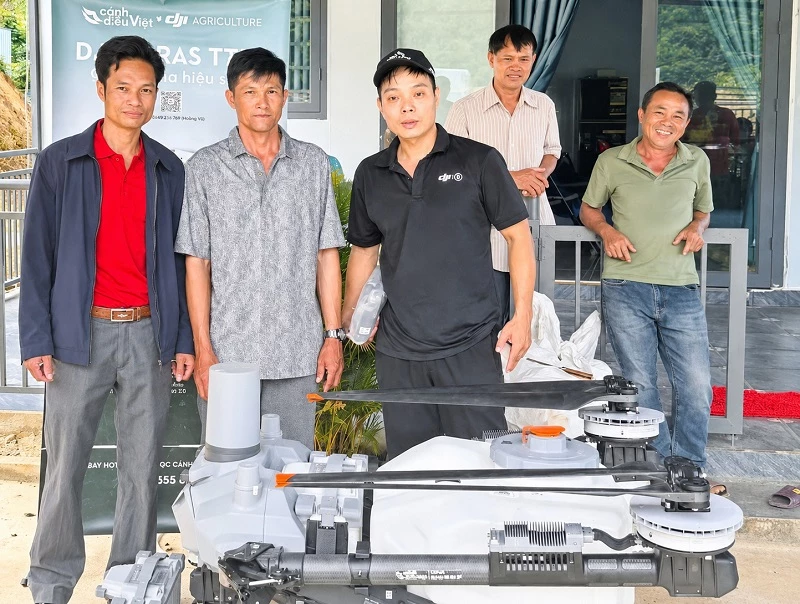
Tran Tan Hung, deputy head of the commune's Economic Division (far left), hands over a DJI AGRAS T70P agricultural drone to the Da Ton Durian Cooperative Group in Bang Lang Village on behalf of the commune People's Committee.
Community Digital Technology Teams serve as a vital link in this process. Their members work directly with residents, helping them install applications, use public services, access verified information and perform basic tasks on smartphones. Across the commune's 10 villages, where access to and familiarity with technology vary widely, the most effective approach remains direct guidance for individual residents and groups of households.
Digital transformation must also deliver visible benefits in agricultural production. Dam Rong 2 has strengths in coffee, durian, mulberry, honey pineapple and livestock farming, as well as several high-tech agricultural models. Used effectively, technology can help farmers obtain market information, access cultivation techniques, monitor weather and control pests and diseases. It can also support traceability, product promotion and links with cooperatives, businesses and consumers.
The commune has established 11 production linkages for durian, honey pineapple and sturgeon, involving 127 households. Twelve three-star OCOP products have also been listed on e-commerce platforms. This gives the locality a foundation for helping producers improve packaging and labelling, add QR-based traceability, develop product photography and brand stories, and strengthen their sales skills on digital platforms.
For farmers, digital transformation is about far more than selling online. More importantly, it means using smartphones to support production: maintaining farm records, managing growing areas, monitoring pests and diseases, tracking prices and connecting with buyers. When technology brings clear benefits to individual households, digital transformation becomes more sustainable and substantive.
Alongside the digital economy, building a digital society requires patient, sustained work. Residents need guidance on using VNeID, cashless payments, electronic health records and official information channels. They must also know how to protect themselves against online fraud.
Simple precautions - never disclosing a one-time password (OTP), avoiding suspicious links and verifying information before transferring money - need to be communicated regularly in clear, accessible language.
Digital tools can also support public security and order, population management, crime prevention and the nationwide movement to safeguard national security. The use of AI-enabled cameras for security surveillance across the commune illustrates how technology is reaching many areas of rural life, from administration and production to the environment and community governance.
Challenges remain. Network infrastructure still needs improvement in some areas; some residents have limited skills in using smart devices, and reluctance to change has not disappeared. Dam Rong 2 must therefore move step by step, beginning with tasks that residents need, can easily understand and carry out, and whose benefits they can see.
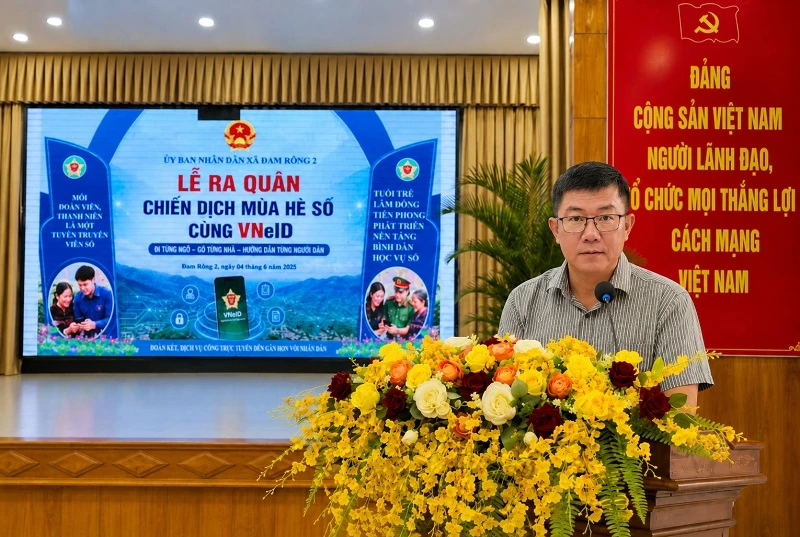
Mr. Duong Tat Phong, Vice Chairman of the Dam Rong 2 Commune People's Committee, speaks at the launch of the 2026 Digital Summer with VNeID campaign.
According to Mr. Duong Tat Phong, Vice Chairman of the Dam Rong 2 Commune People's Committee, digital transformation does not replace people. Instead, it gives the local administration new ways to serve residents more quickly and effectively, while bringing government closer to the people.
It also enables farmers to gain more timely access to knowledge, markets, science and technology; gives local products more opportunities to reach new markets; and makes the management of new-style rural development more open, transparent and sustainable.
"For Dam Rong 2, digital transformation is therefore not an abstract policy concept. It is a practical solution for improving grassroots governance, advancing the rural economy and creating fresh momentum for the commune to gradually meet the new-style rural development criteria during the 2026-2030 period," Phong said.
End of content
Không có tin nào tiếp theo