OCOP value chains drive new-style rural development in Dam Rong 2
Businesses urge Da Nang to open mobile sales points due to shortage in food supply / An overview of the implementation of 'three on-spot' in Da Nang industrial zones
Unlocking the potential of local production areas
Expanding production and raising incomes are among the most difficult tasks in new-style rural development, but they are also among the clearest measures of a rural area's vitality. For Dam Rong 2, a mountainous commune with extensive agricultural resources and a diverse cultural identity, the OCOP Programme offers a practical way to tackle that challenge.
OCOP is about more than awarding star ratings to products. It seeks to build complete value chains encompassing production areas, farming and processing methods, packaging, traceability, the capacity of participating producers and access to consumer markets.
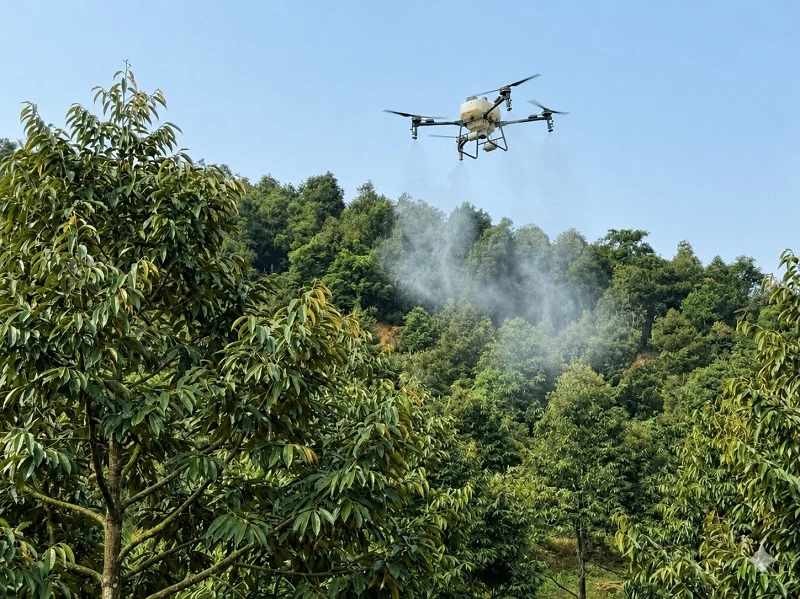
Residents of Dam Rong 2 are investing in mechanisation and applying high technology in agricultural production.
Dam Rong 2's first major advantage is the scale of its production base. According to local data, the commune covers more than 36,557 hectares, of which over 34,250 hectares, or around 93.7%, are classified as agricultural land. Nearly 8,974 hectares are used for agricultural production, while more than 25,258 hectares are forest land. These figures show that farming, hillside cultivation, the forest economy and local products remain central to rural economic development.
Coffee remains the commune's main crop, covering more than 3,955 hectares, including over 3,613 hectares already in production. Durian cultivation has expanded rapidly to more than 1,613 hectares, comprising about 684.8 hectares of monoculture and 928.6 hectares of intercropping. The commune also has nearly 200 hectares of mulberry, 238.8 hectares of other fruit trees and more than 88 hectares of macadamia, alongside rice, maize, vegetables, pepper and cashew.
Livestock and aquaculture are also part of the local production base. Dam Rong 2 has 471 cattle, 1,521 pigs and 37,000 poultry, as well as 45.7 hectares of aquaculture, including 10.7 hectares devoted to sturgeon farming.
Building on this foundation, Dam Rong 2 has developed a varied portfolio of OCOP products and products with OCOP potential. They include Ro Men honey pineapple, HUSA Coffee, Ngoc Thu sun-dried sturgeon, perilla tea, Dam Rong vine tea, agarwood products, bamboo shoots, seeded banana products and several medicinal-herb products. Crucially, many are no longer merely ideas: they are tied to identifiable producers, production areas and production sites.
The Dam Rong Honey Pineapple Cooperative Group in Ro Men 2 hamlet is a clear example. Established in 2021 with seven members farming 11 hectares, it has expanded to 17 members and 23 hectares. Seventeen hectares are now bearing fruit, with annual output estimated at more than 400 tonnes.
Honey pineapple is well suited to local soil and climatic conditions. Through the cooperative-group model, it has also become a more stable livelihood for many households. Production is less fragmented, members are better able to share cultivation experience and apply more consistent practices, and a brand for the local crop is gradually taking shape.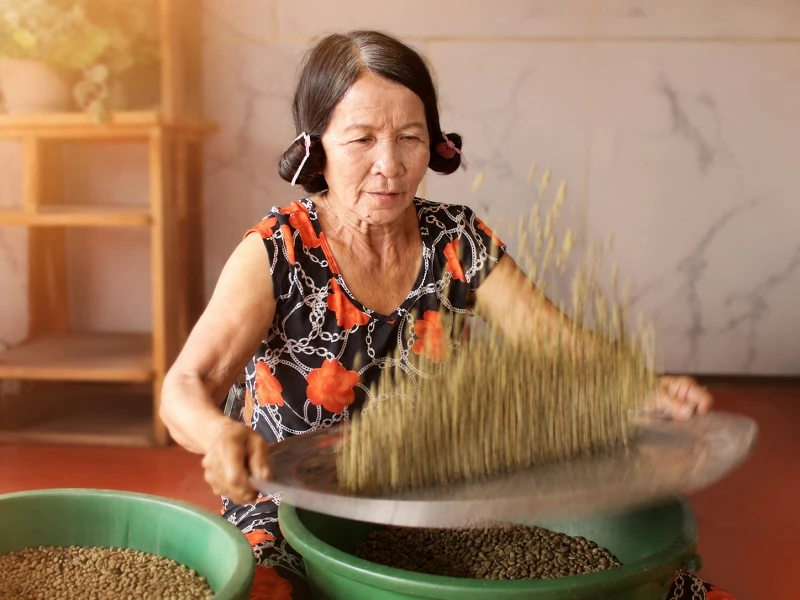
Green coffee beans are hand-selected at HUSA Coffee.
HUSA Coffee illustrates another important direction: increasing the value of the commune's leading crop through processing and branding. Instead of selling only raw beans, the producer now roasts, grinds and packages its coffee, has developed its own brand and is expanding partnerships with farmers to establish safe production areas. Dam Rong 2 should continue encouraging this model, because agricultural products cannot secure a lasting market position through volume alone. They need processing, a compelling product story and a brand that connects directly with consumers.
Planting-area codes and production linkages provide another foundation for OCOP development. The commune currently has 14 coded growing areas involving 81 households and covering 212.79 hectares. Most are devoted to durian and honey pineapple, with registered annual output exceeding 4,148 tonnes. This indicates that commodity production in Dam Rong 2 is gradually meeting requirements for growing-area management, traceability and market standards.
The commune has also formed 11 production and marketing linkages involving 127 households, covering 183.79 hectares and generating an estimated 5,485 tonnes of output. These linkages focus on durian, honey pineapple and sturgeon. This is a necessary shift, because an OCOP product cannot reach larger markets through the isolated efforts of individual households. It needs a stable production area, broadly consistent processes, capable organising entities, clear packaging and labelling, transparent traceability and reliable distribution channels.
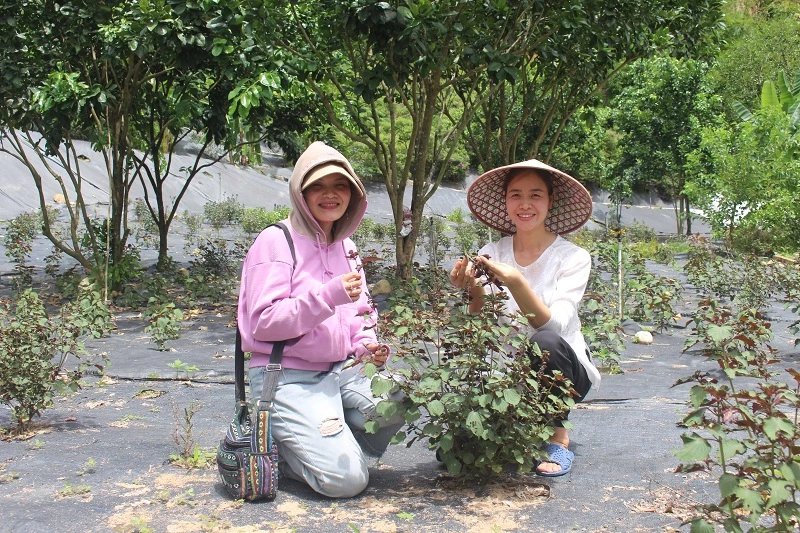
Perilla is grown naturally in the Healing Village in Ro Men hamlet for use in tea products.
For 2026-2030, the commune is prioritising stronger linkages across production, primary processing, further processing and consumption for key products such as coffee, durian, cold-water fish and silkworm cocoons. If this work is carried out effectively, OCOP will no longer be merely a label added at the end of the post-harvest process. It will instead become the outcome of a broader reorganisation of rural production, from rehabilitating low-yield orchards and converting inefficient land to developing production areas and integrated value chains.
Turning OCOP into a driver of new-style rural development
Under the national criteria for new-style rural communes for 2026-2030, rural economic development is a key area. Indicators concerning concentrated production areas, high-tech agricultural or green-economy models, OCOP product development plans, effective cooperatives, community agricultural extension groups, private-sector development and rural tourism all place greater demands on commune-level authorities.
OCOP in Dam Rong 2 should therefore be treated as an integral part of a deeper and more comprehensive new-style rural development strategy, rather than as a stand-alone programme.
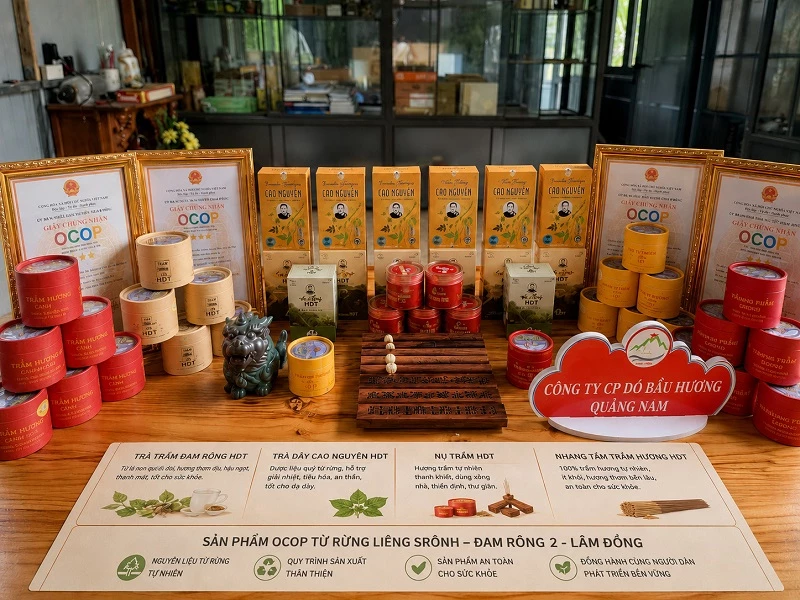
A signature OCOP product from Quang Nam Agarwood Joint Stock Company in Lieng Sronh, Dam Rong 2 Commune.
First and foremost, OCOP must help raise local incomes. When products are standardised, properly labelled, traceable and professionally promoted, they have the potential to command higher prices than unprocessed produce sold through traders. Farmers also gain a stronger incentive to follow established processes and pay greater attention to quality, safety and the stability of production areas. In a commune where farming remains the main livelihood for many households, this directly affects rural living standards.
OCOP is also a test of the capacity of the collective economy. Farmers may produce high-quality raw materials, but meeting product standards and establishing a firm market position require many additional steps that individual households cannot easily manage alone. These range from primary processing, manufacturing and packaging to trademark registration, documentation, promotion and sales.
Cooperatives, branches of cooperatives and cooperative groups working in aquaculture, agricultural services, sericulture, fruit, medicinal herbs, macadamia, honey pineapple and durian provide an important bridge between farmers and markets. Weaker organisations need to be strengthened. Without capable producers and coordinating entities, OCOP products are likely to remain small in scale and may struggle to endure after recognition.
Journalist Minh Lan noted that OCOP also gives Dam Rong 2 an opportunity to showcase its local identity. The commune is home to 19 ethnic groups, with ethnic minority communities accounting for more than 65% of the population.
A product's value lies not only in fresh produce or processed goods, but also in the story of the land, its people, farming practices and community culture. Brocade, local specialities, medicinal-herb products, processed farm goods and well-designed rural tourism models can create additional livelihoods while making cultural identity part of the local economy's value proposition.
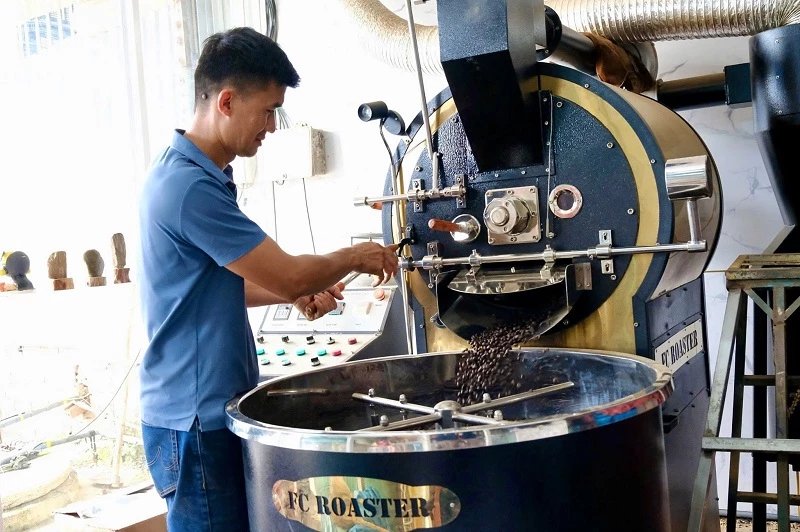
HUSA Coffee has invested in professional roasting equipment to enhance product quality.
Ms Nguyen Thi Thu Hien, Vice Chairwoman of the Lam Dong Province Business Association, said that as market requirements become more demanding, OCOP development in Dam Rong 2 must be closely linked to digital transformation and high-tech agriculture.
Traceability codes, electronic field logs, data-based management of growing areas, professional product photography and transparent information on digital channels and e-commerce platforms can help local products reach a wider customer base. If appropriately deployed, irrigation sensors, pest and disease monitoring, and digital management of cultivation processes can also improve the quality of production areas, particularly for demanding products such as durian, coffee, cold-water fish and medicinal herbs.
Despite its considerable potential, Dam Rong 2 must avoid pursuing product numbers for their own sake. OCOP delivers lasting value only when recognised products continue to improve, maintain standards and find reliable markets. Products reaching the end of their certification period should be reviewed and reassessed, with improvements made to documentation, packaging, food safety and sales capacity. Other promising products need targeted support in technology, product storytelling, brand identity, traceability and market access.
In turn, new-style rural development creates a stronger environment for OCOP products to grow sustainably. Transport, electricity, water, telecommunications, internet access, cultural institutions, vocational training, community agricultural extension and grassroots governance all influence a product's prospects. When rural infrastructure is developed in a coordinated manner and internet coverage reaches residential and production areas, residents are better placed to learn new techniques, sell online, connect with businesses and enter markets beyond the commune.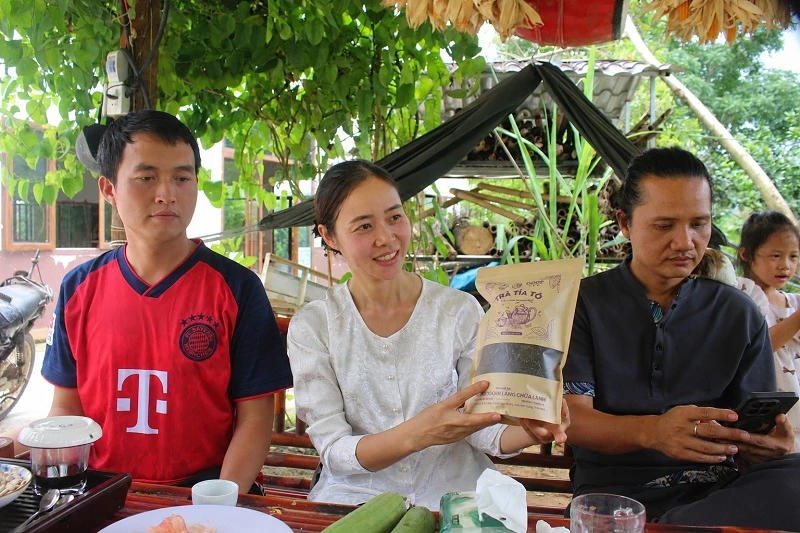
OCOP products have become a source of pride for local producers.
With strengths ranging from coffee, durian, honey pineapple, sturgeon and medicinal herbs to culturally distinctive local goods, Dam Rong 2 has the foundations for OCOP products with a clear identity. The challenge is to select products with genuine competitive advantages, develop capable producers and build integrated chains spanning inputs, cultivation and production through procurement, processing and distribution.
When every link is organised systematically, OCOP can raise the value of agricultural products, create jobs, preserve cultural identity and help the commune meet the criteria for new-style rural development.
For Dam Rong 2, OCOP is therefore more than a star rating printed on packaging. It is a route for local agricultural products to enter the market on the strength of quality and brand recognition, for the collective economy to expand, and for residents to gain greater confidence in their own products. If pursued properly and consistently, OCOP can become one of the commune's most important paths towards deeper, more sustainable and culturally distinctive new-style rural development in the years ahead.
End of content
Không có tin nào tiếp theo